In comparison to other development activities, features are generally seen as more directly tied to revenue generation and growth. In this article we will discuss how to balance feature development with other development tasks based on business objectives and how to ensure that we respond timely to product teams.
Problems in feature delivery
Some of the problems affecting feature delivery are
Not responding to product management on time
It is important to respond to product management on time about whether a feature can be delivered in the current product timeline as there are lot of additional activities associated with features that have to start along with the development such as creating marketing material, communicating about the new feature to stakeholders and customers etc.
Not balancing new feature request with other development tasks
The ideal percentage of time spent on feature development versus other development tasks can vary depending on the specific needs and priorities of the business. However, in general, it is desirable to have a higher percentage of time spent on feature development, as this is what typically drives the most value for the business.
While feature development is important, other development tasks such as bug fixing, performance optimization, and maintenance are also critical to meet customer needs. If engineering teams focus solely on feature development, technical debt can accumulate, leading to future issues and increased development costs. A balance between these tasks can ensure that the product is not only delivering new features but also maintaining a high level of quality.
Balancing feature development with other tasks can also help ensure that team members have a variety of work and can avoid getting stuck on the same task for too long.
Feature Charts
Feature charts give details about different stages of feature development such as new feature request, feasibility analysis and development. Number of feature requests that have not yet started feasibility analysis can be seen in eval section, features going through feasibility analysis in "progress", accepted features in "accepted" and features delivered in "closed". On feature request it can be either accepted or rejected based on feasibility analysis, both are taken into account while calculating time spent on feature development.
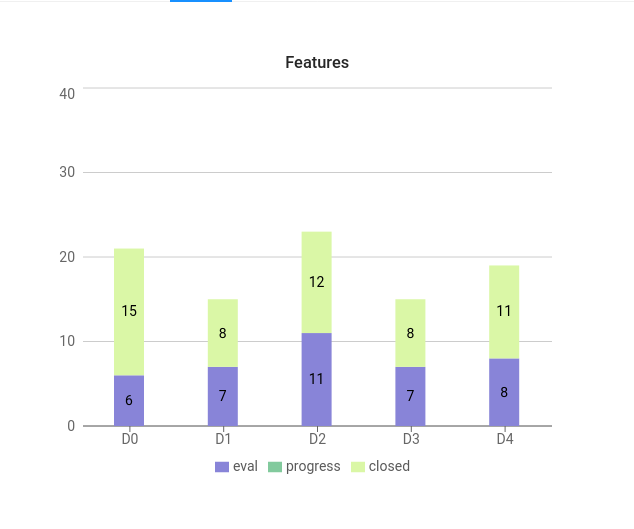
Using feature charts to ensure timely evaluation of features
To ensure timely evaluation of features managers should look at the average time it is taking to accept the features. This time includes time spent on "eval" queue until feasibility analysis started, time spent on feasibility analysis of features that are not yet accepted/rejected and the total time spent until the feature is accepted or rejected. This average time is the time it takes to respond to product teams and managers should set the goal to keep it within acceptable limit as defined in their organization.
This should be tracked regularly to ensures that development teams are able to evaluate if feature can be implemented and accept/reject it quickly so that it can be incorporated into product roadmap. In case feature is accepted it is also advisable to give tentative estimates to help product teams in deciding its priority.
Issues Chart
Issues chart provides details of issues closed in current period by their type and average time it took to close the issues in a given period. It can be used to check the percentage of features that were delivered in comparison to other issues.
Using Issue charts to ensure balance of new features and other tasks
By analyzing percentage of features delivered as compared to other tasks managers can identify if there is a balance between them and in case it is not they can recalibrate priorities to ensure balance of feature development with respect to other development activities is maintined. This will ensure that their team's work is aligned with the business objectives of the company and ensure that they are focused on tasks that will drive the most value for the business.
Coclusion
It is important to respond to product managers on time when a new feature is requested. Feature charts can be used to track the average time it takes to evaluate feature and helps in enuring this. It is also important to have a balance of features as compared to other development tasks. Issues chart gives breakdown of features delivered as compared to other development activities and can be used create balance of features with rest of the development tasks so that teams work is aligned with the business objectives.